
Your heart didn't quit.
Neither should you.
Three structured sessions per week, each calibrated to your current ejection fraction and stress-test baseline. Progress tracked to the second.

Gerald climbed a flight of stairs without stopping.
“My cardiologist told me to stay active after bypass. Pulse told me exactly how — and showed me it was safe.”
Gerald had avoided the stairs in his home for six months after his bypass surgery. At week 9 of the Pulse program, his heart rate recovery dropped from 28 bpm to 14 bpm in the first minute post-exertion — a clinical marker his cardiologist called "remarkable."
Measured across 847 participants completing the full 12-week program. A resting heart rate below 60 bpm reduces all-cause mortality risk by up to 18%.
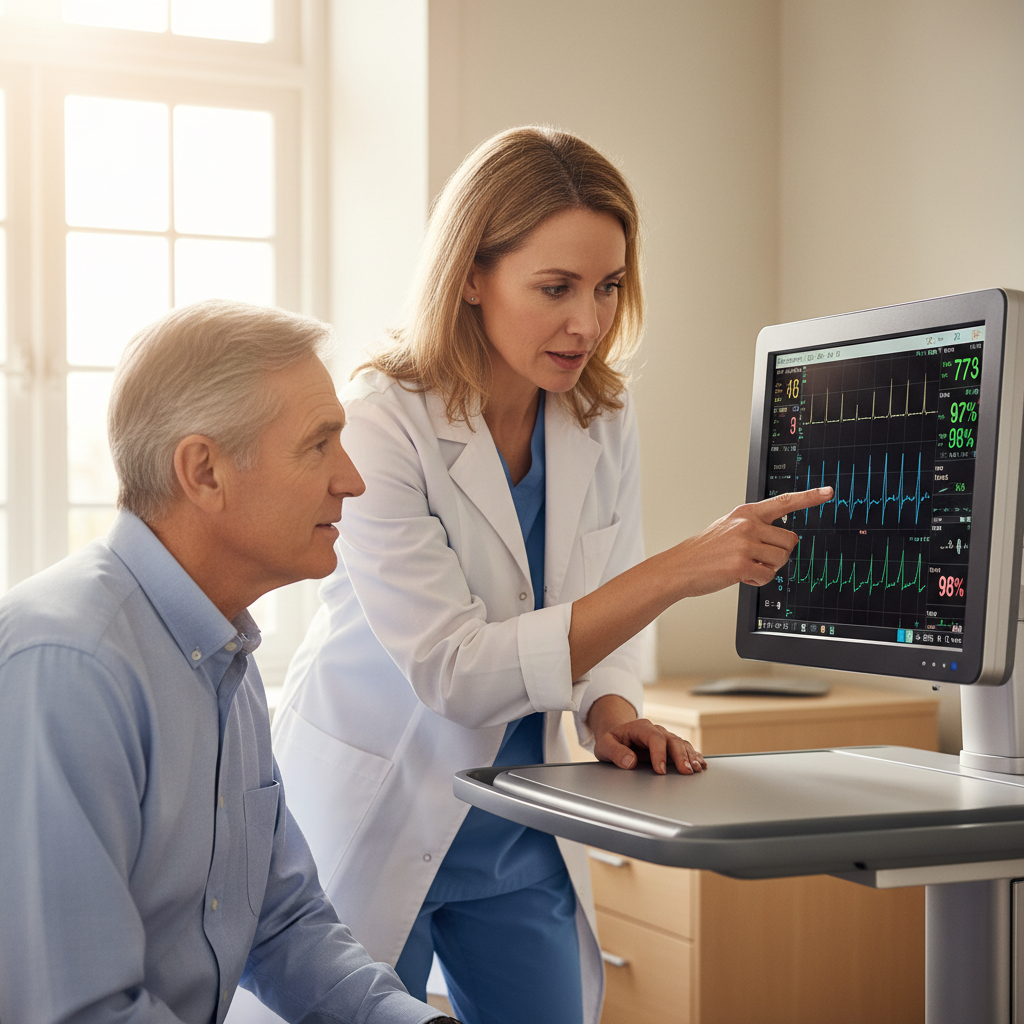
What 34 bpm means to a cardiologist.
“A drop of that magnitude in resting heart rate is not cosmetic. It means the left ventricle is working more efficiently. We see it change prognoses.”
Resting heart rate is one of the most reliable long-term predictors of cardiovascular mortality. Every 10 bpm reduction correlates with a 9% decrease in cardiac-related hospitalization. The Pulse protocol achieves average reductions of 34 bpm in 12 weeks through calibrated aerobic intervals — not generic fitness advice.
Calibrated to your cardiac data.
Not a generic fitness plan.
Every session is built from your ejection fraction, stress-test thresholds, and real-time heart rate recovery. The trail is marked before you take the first step.
VO₂ max is the gold standard measure of cardiorespiratory fitness — and the strongest predictor of long-term survival in cardiac patients. A 68% improvement means your heart is doing far less work to keep you moving.
Every session monitored by a certified cardiac exercise specialist. Heart rate, perceived exertion, and recovery time recorded at each interval.
Every participant has a cardiologist-cleared protocol before their first session. We do not guess at safe exertion levels — we calculate them from your stress test.
If your EF is 35–50%, your treadmill intervals are set at 60–70% of heart rate reserve — not a generic “moderate intensity.” As your EF improves, the program recalibrates.
HRR at 1 minute post-exercise is measured every session. A drop of less than 12 bpm flags a review with your supervising clinician before the next session.
Three session types, one coherent protocol.
Built around your specific cardiac profile, not a one-size-fits-all template.
Treadmill Intervals
Calibrated to ejection fraction. Speed and incline auto-adjusted to keep HR in your prescribed zone.
Resistance Training
Resistance bands prescribed by stress-test thresholds. No free weights until Stage 2 clearance.
Cooldown Walks
Heart rate recovery tracked to the second. Recovery data feeds directly into next session calibration.
The cardiologists who refer
their own patients.
I refer post-bypass patients to Pulse because it's the only program that sends me back real data. I can see their HRR trends, their ejection fraction response, their session compliance. It changes how I manage their follow-up care.

Stage B heart failure patients are told to stay active and sent home with a pamphlet. Pulse gives them a protocol calibrated to their specific hemodynamics. The VO₂ max improvements I've seen in my patients at 12 weeks are not what I'd expect from traditional cardiac rehab.

My patients who are afraid to exert themselves after a cardiac event need two things: clinical proof it's safe, and someone watching them the first time. Pulse provides both. The zero adverse event record across 4,200 sessions is the number I show their spouses.

Send your patient a clinical summary of our protocols.
One page. Includes calibration methodology, safety record, data reporting format, and how we integrate with your follow-up care. No marketing language.
Get your exercise plan.
Three questions. Three minutes. A protocol calibrated to your cardiac data, not a generic fitness template.
No session begins without cardiologist clearance and stress-test review. Your information is shared only with your supervising clinical team. We do not sell or share patient data.